Almost everyone I’ve heard from got into sound healing the same way: they lay down in a session, not expecting much, and got up feeling lighter than they had in ages. Others come from somewhere close by. They’re yoga teachers, counsellors or musicians who’ve started to feel that sound could add something to the work they already do. And some just want a career that means something to them, and can’t quite say why sound is the answer.
Whatever brought you here, you’re probably asking the same thing: how to become a sound healer, and where to begin.
There’s no single fixed path, but there is a sensible order to it. This guide walks through that order, from your first session as a client to your first session as a practitioner, and explains what to look for in a sound healing course and in your sound healer certification.
What does a sound healer actually do?
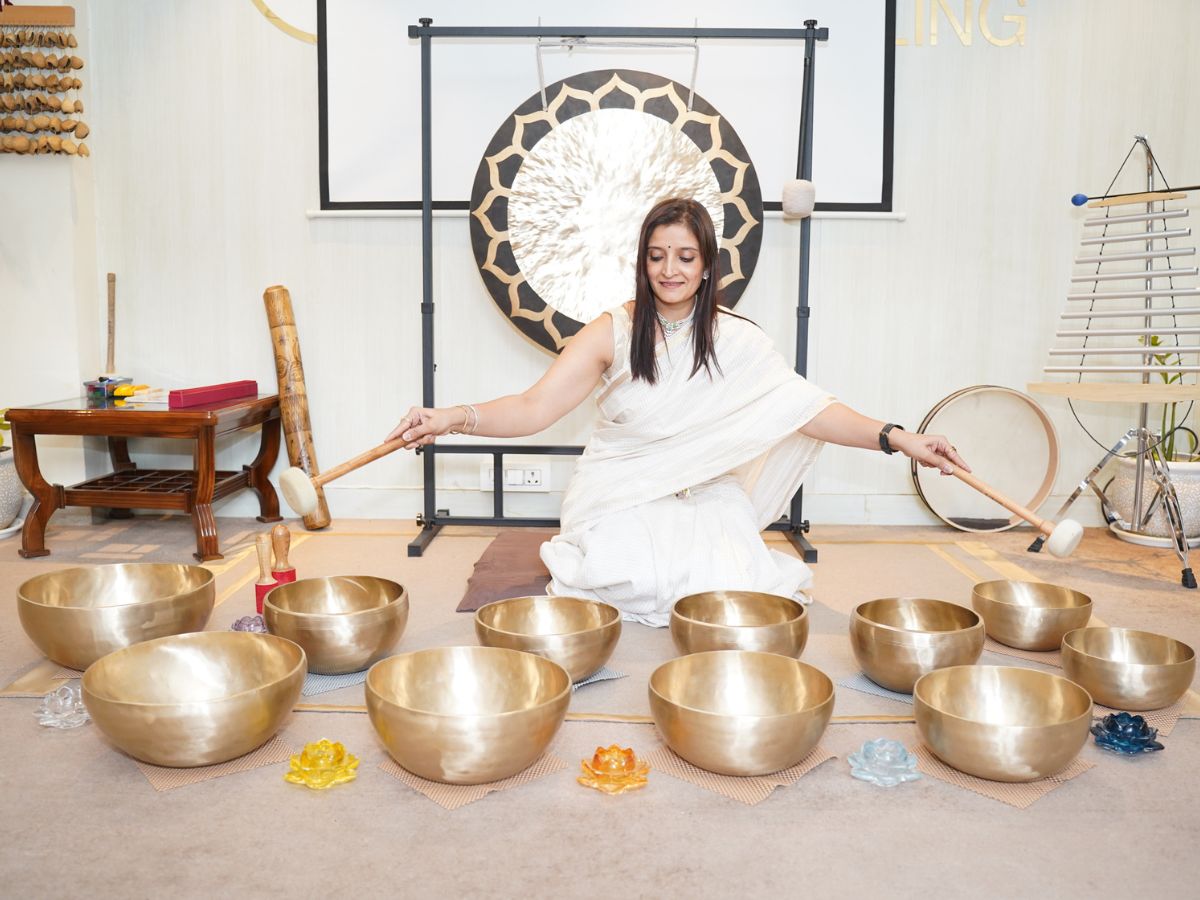
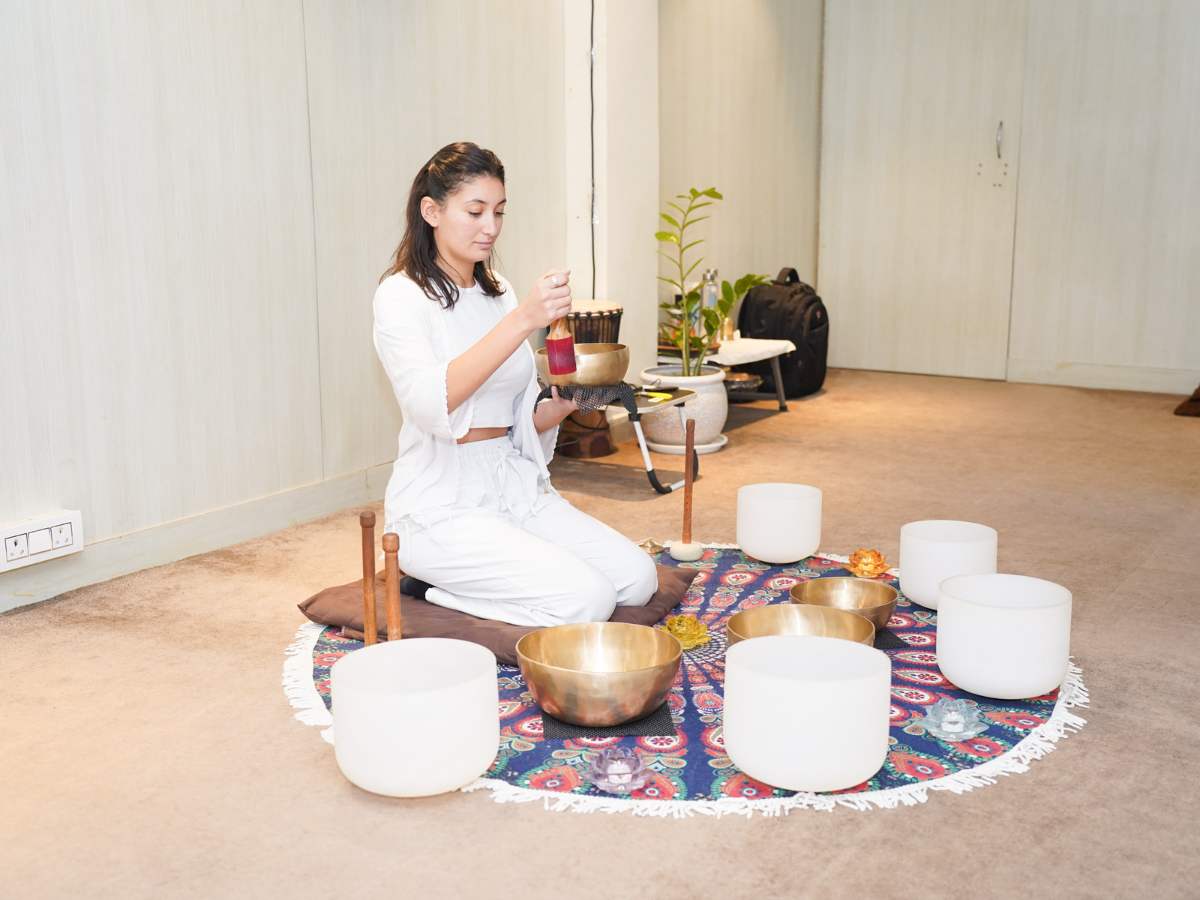
A sound healer uses sound and vibration through instruments like singing bowls,gongs,tuning forks and the voice, to help people relax, settle their nervous system and become more aware of what’s going on inside them.
That last part matters. A good sound healer isn’t there to perform. Playing an instrument beautifully is only a small part of the job. The real work is understanding the person in front of you choosing an approach that suits them and knowing when sound is helpful and when it isn’t.
Sessions can be one to one in groups or in settings like wellness studios, yoga spaces, retreats and workplaces. In every case the practitioner’s understanding matters far more than the number of instruments on the floor.
Do you need a sound healer certification?
In most countries, sound healing isn’t a regulated profession, so there’s no law that says you must be certified. Anyone can call themselves a sound healer.
But that’s exactly why sound healer certification is worth taking seriously. Structured training gives you a foundation you can’t get from watching videos or buying a set of bowls. It also gives clients and employers a reason to trust you, and it gives you a clear sense of your own limits.
One honest caution a certificate doesn’t guarantee clients, income or clinical results. It shows you’ve completed organized, professional education. What you do with it and how much you keep learning afterward is up to you.
How to become a sound healer: 7 steps
1. Be clear about why you want to do this
Before you spend any money, spend some time with this question. Do you want to help others? Deepen your own practice? Add sound to work you already do? Change careers completely?
Your answer shapes everything else, including which course you choose and how much time you’ll need to commit.
2. Experience sound as a client first
Book a few sessions with different practitioners. Notice what works for you, what doesn’t, and how the practitioner made you feel, both during and after. It’s the best research you can do, and it will teach you what kind of practitioner you want to be.
3. Learn the foundations, not just the instruments
This is where many beginners go wrong. They start by collecting bowls and learning to play them, and skip the understanding underneath.
A strong foundation includes how sound and vibration relate to the human body, a basic understanding of the nervous system and stress responses, the traditional and philosophical roots of sound practices, and how to assess what a person needs before you begin.
The instrument is a tool. Understanding is the real knowledge.
4. Choose the right sound healing course
This is the biggest decision on the list, so it gets its own section below.
5. Practice, and reflect on it
Knowledge turns into skill only through practice. Work with friends, family and volunteers. Notice how people respond, ask for honest feedback, and write down what you observe. Which approach did you use, why did you choose it, and what changed afterward? This habit of observation will make you a better practitioner than any amount of theory alone.
6. Complete your certification
Once you’ve finished your training and the required practice, you’ll receive your certificate. Check that you understand what it covers, who accredits it and what the assessment involved. Keep records of your training hours and case notes, because they’ll be useful later.
7. Start small and keep learning
Your first year doesn’t need to be a full-time business. Many practitioners begin with community sessions, small group workshops or by adding sound to an existing practice. Confidence grows with experience, and so does your sense of what kind of work you enjoy most.
What to look for in a sound healing course
Not all training is equal, so it’s worth asking a few direct questions before you enrol.
Does it teach understanding as well as technique? A course that only teaches you to play instruments will leave you with skill but little judgment. Look for one that covers science, philosophy, application and ethics.
Is the teaching honest about results? Be cautious of any course or teacher promising guaranteed healing, miracle outcomes or a quick route to becoming a “powerful healer.” Real education is upfront about what sound can and can’t do.
Does it include practical training? You should practice under guidance, not just read or watch.
Is it recognized by professional bodies? Look for accreditation from recognized international organizations, and check that the claims are accurate. Accreditation reflects professional standards and structured education. It doesn’t guarantee employment.
Does it aim to make you independent? The best teachers want you to grow into a confident, ethical practitioner, not to depend on them forever.
Skills that make a good Sound Healer
Beyond technical ability, the practitioners people trust tend to share a few qualities. They listen well. They stay calm in the room. They’re honest about what they don’t know. They respect people’s beliefs and backgrounds, and they understand that a session is about the client, not about the practitioner’s talent.
Ethics belongs on this list too. That means being clear that sound healing complements, but never replaces, medical or psychological care. If a client has a health concern, a responsible practitioner encourages them to see a qualified professional.
Career paths after certification
Sound healing skills can be used in many ways. Some practitioners run private one-to-one sessions. Others lead group sessions or workshops, work in wellness centres and yoga studios, or offer sessions at retreats and corporate wellbeing events. Many people combine sound healing with an existing career, such as yoga teaching, counselling, massage therapy, music or education.
Earnings vary a great deal from person to person, depending on location, experience, reputation and how you choose to work, so be wary of anyone who quotes you a fixed figure.
How Yogshri Healing approaches sound healer training
At Yogshri Healing, we’re a training and research institute, and that shapes how we teach. Our approach brings together ancient knowledge, inspired by the wisdom of Vedic teachings, with modern scientific understanding of the nervous system, stress and well-being.
As part of our ongoing research, we’re also working with our proprietary EEG Stress Marker Technology to observe and document changes in stress-related brain activity linked to sound-based practices. We want to complement personal experience with measurable observation wherever that’s possible, without overstating what the data shows.
Our teaching follows three simple values: Learn, Practice, Share. We want students to leave with real understanding, practical skill and the confidence to work independently and ethically.
Our programs are supported by international recognition, including IPHM, ICAHP, Yoga Alliance and the International Federation of Sound Healing Practitioners (IFSHP). Our spiritual foundation is inclusive and non-religious, and we welcome people from all backgrounds.
Final thoughts
Learning how to become a sound healer isn’t about buying the most instruments or collecting the most certificates. It’s about understanding people, practicing with care and being honest about what you know. Choose a sound healing course that respects your intelligence, and a sound healer certification that reflects real education, and you’ll be building your practice on solid ground.
If you’re ready to take the next step, explore our training programs at Yogshri Healing and see whether our approach feels right for you.
Frequently asked questions
How long does it take to become a sound healer?
It depends on the program and how much time you can give it. Some courses run over a few weeks and others over several months. What matters more than speed is that you’ve had enough time to learn the foundations and practice properly.
Do I need a musical background?
No. Understanding, sensitivity and practice matter more than musical training, though many musicians do find it helpful.
Can I take a sound healing course online?
Some learning can be done online, particularly theory. Hands-on practice is valuable, so check how a course handles the practical side.
Is sound healing a replacement for medical treatment?
No. It’s a complementary practice that supports relaxation and well-being, and it shouldn’t replace professional medical care.